
No Pull Dog Harness
Are you familiar with the benefits of this type of harness and ready to make a purchase? We’ve rounded up the top-rated options on Amazon for 2025 right here.
If you’d like to learn more about this type of harness—including its pros and cons— you can find everything you need right here.
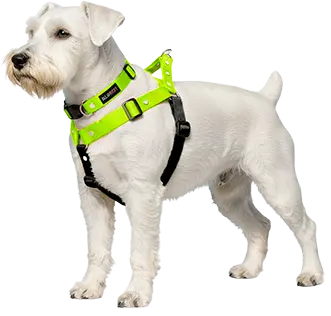
What is a No-Pull Harness?
A no-pull harness (also known as a front-clip harness and easy walk dog harness) is more than just gear—it’s your secret weapon for making walks enjoyable again. It’s a clever training tool designed around a simple concept: if pulling becomes uncomfortable, they’ll stop doing it.
The magic lies in where the leash attaches—right at the center of the chest. Unlike traditional back-clip harnesses, which actually give dogs the leverage they need to pull you along, this design gently guides them.
By slightly shifting their balance when they lead too hard, it can completely transform your walking experience. Many trainers even call it a “magic” tool. It’s the perfect way to stop battling your best friend and start enjoying peaceful strolls together, almost as if your dog were walking perfectly right by your side.
The Secret Behind the Front-Clip Harness
The mechanics are rooted in simple physics. When you attach the leash to your dog’s chest, three key things happen:
The Pivoting Effect: If your dog tries to lunge forward, the leash tension gently guides them back toward you. Instead of gaining ground, they end up facing sideways or back in your direction.
Neutralizing the Opposition Reflex: Dogs have a natural instinct to push against pressure—if you pull on their back, they pull forward. Moving the control point to the chest overrides this automatic response.
Center of Gravity Control: By guiding your dog from the chest, you gain control over their front end, which is exactly where their pulling power originates.
Best No Pull Dog Harness
Once you start shopping, you’ll find a huge variety of no-pull harnesses on the market, which can feel a bit overwhelming. But don’t worry—we’ve already rounded up the highest-rated options on Amazon for you.
Still have questions about this harness? Below, you’ll find more in-depth information and a helpful FAQ section.

Smart Lamp
An intelligent lamp that adapts to your mood and environment with customizable ambiance and smart home integration.

Ergonomic Chair
A chair designed for ultimate comfort and posture support, enhancing productivity.

Portable Projector
A compact and powerful projector for cinematic quality anywhere.
Smart Lamp
An intelligent lamp that adapts to your mood and environment with customizable ambiance and smart home integration.
Ergonomic Chair
A chair designed for ultimate comfort and posture support, enhancing productivity.
Portable Projector
A compact and powerful projector for cinematic quality anywhere.
FAQs: Common Questions About No-Pull Dog Harnesses
This kind of harness is an ingenious accessory, their front attaching leash is over their breastbone gently throws them slightly off balance and immediately redirects them away from the path they were intent on taking. The moment your dog feels this subtle “steering,” they quickly learn that pulling no longer helps them move forward.
Imagine that every time you try to run forward, an invisible but gentle force you to turn to the side, preventing you from moving forward with any real momentum. It doesn’t hurt, it doesn’t suffocate you, but it simply makes pulling pointless. That’s exactly how your dog feels when wearing an anti-pull harness.
It Protects Your Dog’s Neck: A dog’s neck is sensitive. Constant pulling with a collar or a poorly fitted traditional harness can put pressure on the trachea, blood vessels, and may even contribute to long-term eye issues. By attaching the leash to the chest, the force is distributed across your dog’s entire torso, completely removing all pressure from their neck.
Improves Your Control and Communication: The front clip leash attachment gives you gentle yet firm control. By redirecting your dog toward you when they pull, you are not only preventing them from advancing, but you are also asking for their attention. This makes it a much better communication and training tool than a quick yank on a collar.
Works for Practically All Dogs: From puppies learning leash manners to large, powerful dogs who just can’t help but pull, this type of harness is effective for most breeds and sizes. If you have a high-energy dog or one who is easily distracted, this accessory will be a massive help.
Prevents Escapes (When Fitted Correctly): Many no-pull harness models feature a double-strap design that, when properly adjusted, makes them far more escape-proof than collars, giving you peace of mind on the street.
Switching from a collar or a traditional harness offers benefits that go far beyond just making walks more comfortable for you:
Choosing the right harness and using it correctly is the key to seeing immediate results. Just keep in mind this 3 factors:
1- Front Clip: Attachment right on the dog’s chest. This simple difference is what makes them so effective at redirecting your pup gently.
2- Material: Ensure the material is tough and durable enough to handle outdoor adventures, but still soft and gentle against your dog’s skin.
3- Adjustable Buckles: The harness should have multiple adjustment points (around the neck and the body). A loose-fitting harness won’t work.
Extra Tip: The Golden Rule of Fit: You should be able to comfortably fit two fingers between the harness and your dog’s body. No more, no less.
The short answer is: Yes, absolutely. The no-pull harness is more than just an accessory; it’s a positive and safe training tool that instantly changes the dynamic of your walks. It is not a magic fix that does all the work (you should always supplement it with training), but it is the best shortcut to achieving a more relaxed and secure walk without the risk of damaging your dog’s neck.
Although a no-pull dog harness is extremely effective for training, many dog training professionals don’t recommend it for long daily walks, and it certainly shouldn’t be considered a magic solution for leash pulling. It’s a very popular tool, but it hides some side effects that could be changing the way your dog moves without you even realizing it.
The main problem with many no-pull dog harness designs is how they affect mobility. Because they are designed to turn the dog when it pulls, the straps often go over the dog’s shoulders. Here I’ll explain the most significant drawbacks:
Restricted movement (Gait change): Many of these harnesses restrict the extension of the front legs. This causes the dog to walk unnaturally, which can eventually lead to muscle discomfort.
Chafing and sensitive skin: Because they have more straps and are in direct contact with the armpits, they can cause irritation if the material is not high-quality or if the fit is too tight.
False sense of training: This accessory helps control walks, but it doesn’t teach the dog to walk beside you willingly. It’s a mechanical aid, not an automatic trainer.
Fitting problems: If the harness slips to one side, it can press on sensitive areas of the chest or even hit the dog’s legs while walking.
Not all harnesses are created equal. Some front-clip models are more comfortable for a dog’s anatomy than others. The most important thing is to observe whether your pet can move its shoulders freely while wearing it.
Not all harnesses work the same way. Depending on your pet’s strength and behavior, there are several options: Front-clip harness: The most common type. It redirects the dog sideways when there is tension on the leash. Martingale-style harness: Some models tighten slightly around the chest when the dog pulls, giving them a physical signal to slow down without causing painful constriction. Dual-clip harness: These have attachment points on both the chest and the back. They are ideal for very large or reactive dogs, as they allow the use of a double-ended leash for maximum control.